|
NEW!
Top Ten Fiction
 City of Girls: A Novel -Elizabeth Gilbert - AN INSTANT NEW YORK TIMES BESTSELLER! City of Girls: A Novel -Elizabeth Gilbert - AN INSTANT NEW YORK TIMES BESTSELLER!
From the # 1 New York Times bestselling author of Eat Pray Love and The Signature of All Things, a delicious novel of glamour, sex, and adventure, about a young woman discovering that you don't have to be a good girl to be a good person.
"A spellbinding novel about love, freedom, and finding your own happiness." - PopSugar
"Intimate and richly sensual, razzle-dazzle with a hint of danger." -USA Today
"Pairs well with a cocktail...or two." -TheSkimm
"Life is both fleeting and dangerous, and there is no point in denying yourself pleasure, or being anything other than what you are."
Beloved author Elizabeth Gilbert returns to fiction with a unique love story set in the New York City theater world during the 1940s. Told from the perspective of an older woman as she looks back on her youth with both pleasure and regret (but mostly pleasure), City of Girls explores themes of female sexuality and promiscuity, as well as the idiosyncrasies of true love.
In 1940, nineteen-year-old Vivian Morris has just been kicked out of Vassar College, owing to her lackluster freshman-year performance. Her affluent parents send her to Manhattan to live with her Aunt Peg, who owns a flamboyant, crumbling midtown theater called the Lily Playhouse. There Vivian is introduced to an entire cosmos of unconventional and charismatic characters, from the fun-chasing showgirls to a sexy male actor, a grand-dame actress, a lady-killer writer, and no-nonsense stage manager. But when Vivian makes a personal mistake that results in professional scandal, it turns her new world upside down in ways that it will take her years to fully understand. Ultimately, though, it leads her to a new understanding of the kind of life she craves - and the kind of freedom it takes to pursue it. It will also lead to the love of her life, a love that stands out from all the rest.
Now eighty-nine years old and telling her story at last, Vivian recalls how the events of those years altered the course of her life - and the gusto and autonomy with which she approached it. "At some point in a woman's life, she just gets tired of being ashamed all the time," she muses. "After that, she is free to become whoever she truly is." Written with a powerful wisdom about human desire and connection, City of Girls is a love story like no other.List Price:$28.00
Our Price:$16.80
|
 Evvie Drake Starts Over: A Novel -Linda Holmes - From the host of NPR’s Pop Culture Happy Hour podcast comes a heartfelt debut about the unlikely relationship between a young woman who’s lost her husband and a major league pitcher who’s lost his game. Evvie Drake Starts Over: A Novel -Linda Holmes - From the host of NPR’s Pop Culture Happy Hour podcast comes a heartfelt debut about the unlikely relationship between a young woman who’s lost her husband and a major league pitcher who’s lost his game.
“A quirky, sweet, and splendid story of a woman coming into her own.”—Taylor Jenkins Reid, New York Times bestselling author of Daisy Jones & The Six
In a sleepy seaside town in Maine, recently widowed Eveleth “Evvie” Drake rarely leaves her large, painfully empty house nearly a year after her husband’s death in a car crash. Everyone in town, even her best friend, Andy, thinks grief keeps her locked inside, and Evvie doesn’t correct them.
Meanwhile, in New York City, Dean Tenney, former Major League pitcher and Andy’s childhood best friend, is wrestling with what miserable athletes living out their worst nightmares call the “yips”: he can’t throw straight anymore, and, even worse, he can’t figure out why. As the media storm heats up, an invitation from Andy to stay in Maine seems like the perfect chance to hit the reset button on Dean’s future.
When he moves into an apartment at the back of Evvie’s house, the two make a deal: Dean won’t ask about Evvie’s late husband, and Evvie won’t ask about Dean’s baseball career. Rules, though, have a funny way of being broken—and what starts as an unexpected friendship soon turns into something more. To move forward, Evvie and Dean will have to reckon with their pasts—the friendships they’ve damaged, the secrets they’ve kept—but in life, as in baseball, there’s always a chance—up until the last out.
A joyful, hilarious, and hope-filled debut, Evvie Drake Starts Over will have you cheering for the two most unlikely comebacks of the year—and will leave you wanting more from Linda Holmes.
Praise for Evvie Drake Starts Over
“Charming, hopeful, and gently romantic . . . Evvie Drake is great company.”—Rainbow Rowell, #1 New York Times bestselling author of Eleanor & Park
“Effortlessly enjoyable . . . [a] pitch-perfect . . . adult love story that is as romantic as it is real.”–USA TodayList Price:$26.00
Our Price:$17.67
|
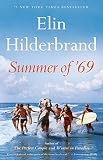 Summer of '69 -Elin Hilderbrand - Summer of '69 -Elin Hilderbrand - The #1 New York Times and USA Today bestseller!
Four siblings experience the drama, intrigue, and upheaval of a summer when everything changed, in New York Times bestselling author Elin Hilderbrand's first historical novel
Welcome to the most tumultuous summer of the twentieth century. It's 1969, and for the Levin family, the times they are a-changing. Every year the children have looked forward to spending the summer at their grandmother's historic home in downtown Nantucket. But like so much else in America, nothing is the same: Blair, the oldest sister, is marooned in Boston, pregnant with twins and unable to travel. Middle sister Kirby, caught up in the thrilling vortex of civil rights protests and determined to be independent, takes a summer job on Martha's Vineyard. Only-son Tiger is an infantry soldier, recently deployed to Vietnam. Thirteen-year-old Jessie suddenly feels like an only child, marooned in the house with her out-of-touch grandmother and her worried mother, each of them hiding a troubling secret. As the summer heats up, Ted Kennedy sinks a car in Chappaquiddick, man flies to the moon, and Jessie and her family experience their own dramatic upheavals along with the rest of the country.
In her first historical novel, rich with the details of an era that shaped both a nation and an island thirty miles out to sea, Elin Hilderbrand once again earns her title as queen of the summer novel.
List Price:$28.00
Our Price:$16.80
|
 How to Read Literature Like a Professor: A Lively and Entertaining Guide to Reading Between the Lines, Revised Edition -Thomas C Foster - - Harper Perennial How to Read Literature Like a Professor: A Lively and Entertaining Guide to Reading Between the Lines, Revised Edition -Thomas C Foster - - Harper Perennial A thoroughly revised and updated edition of Thomas C. Foster’s classic guide—a lively and entertaining introduction to literature and literary basics, including symbols, themes and contexts, that shows you how to make your everyday reading experience more rewarding and enjoyable. While many books can be enjoyed for their basic stories, there are often deeper literary meanings interwoven in these texts. How to Read Literature Like a Professor helps us to discover those hidden truths by looking at literature with the eyes—and the literary codes-of the ultimate professional reader, the college professor. What does it mean when a literary hero is traveling along a dusty road? When he hands a drink to his companion? When he’s drenched in a sudden rain shower? Ranging from major themes to literary models, narrative devices and form, Thomas C. Foster provides us with a broad overview of literature—a world where a road leads to a quest, a shared meal may signify a communion, and rain, whether cleansing or destructive, is never just a shower-and shows us how to make our reading experience more enriching, satisfying, and fun. This revised edition includes new chapters, a new preface and epilogue, and incorporates updated teaching points that Foster has developed over the past decade. List Price:$16.99
Our Price:$13.63
|
 Little Fires Everywhere: A Novel -Celeste Ng - The #1 New York Times bestseller! Little Fires Everywhere: A Novel -Celeste Ng - The #1 New York Times bestseller!
Soon to be a Hulu limited series starring Reese Witherspoon and Kerry Washington.
Named a Best Book of the Year by:
People, The Washington Post, Bustle, Esquire, Southern Living, The Daily Beast, GQ, Entertainment Weekly, NPR, Amazon, Barnes & Noble, iBooks, Audible, Goodreads, Library Reads, Book of the Month, Paste, Kirkus Reviews, St. Louis Post-Dispatch, and many more...
“I read Little Fires Everywhere in a single, breathless sitting.” —Jodi Picoult
“To say I love this book is an understatement. It’s a deep psychological mystery about the power of motherhood, the intensity of teenage love, and the danger of perfection. It moved me to tears.” —Reese Witherspoon
“Extraordinary . . . books like Little Fires Everywhere don't come along often.” —John Green
From the bestselling author of Everything I Never Told You, a riveting novel that traces the intertwined fates of the picture-perfect Richardson family and the enigmatic mother and daughter who upend their lives.
In Shaker Heights, a placid, progressive suburb of Cleveland, everything is planned—from the layout of the winding roads, to the colors of the houses, to the successful lives its residents will go on to lead. And no one embodies this spirit more than Elena Richardson, whose guiding principle is playing by the rules.
Enter Mia Warren—an enigmatic artist and single mother—who arrives in this idyllic bubble with her teenaged daughter Pearl, and rents a house from the Richardsons. Soon Mia and Pearl become more than tenants: all four Richardson children are drawn to the mother-daughter pair. But Mia carries with her a mysterious past and a disregard for the status quo that threatens to upend this carefully ordered community.
When old family friends of the Richardsons attempt to adopt a Chinese-American baby, a custody battle erupts that dramatically divides the town—and puts Mia and Elena on opposing sides. Suspicious of Mia and her motives, Elena is determined to uncover the secrets in Mia’s past. But her obsession will come at unexpected and devastating costs.
Little Fires Everywhere explores the weight of secrets, the nature of art and identity, and the ferocious pull of motherhood—and the danger of believing that following the rules can avert disaster.
Perfect for book clubs! Visit celesteng.com for discussion guides and more.List Price:$17.00
Our Price:$9.86
|
 The Alchemist -Paulo Coelho - - Note: Item has rough Cut edges(Edges are cut improperly intentionally by the manufacturer) - A special 25th anniversary edition of the extraordinary international bestseller, including a new Foreword by Paulo Coelho. - Combining magic, mysticism, wisdom and wonder into an inspiring tale of self-discovery, The Alchemist -Paulo Coelho - - Note: Item has rough Cut edges(Edges are cut improperly intentionally by the manufacturer) - A special 25th anniversary edition of the extraordinary international bestseller, including a new Foreword by Paulo Coelho. - Combining magic, mysticism, wisdom and wonder into an inspiring tale of self-discovery, Note: Item has rough Cut edges(Edges are cut improperly intentionally by the manufacturer)
A special 25th anniversary edition of the extraordinary international bestseller, including a new Foreword by Paulo Coelho. Combining magic, mysticism, wisdom and wonder into an inspiring tale of self-discovery, The Alchemist has become a modern classic, selling millions of copies around the world and transforming the lives of countless readers across generations. Paulo Coelho's masterpiece tells the mystical story of Santiago, an Andalusian shepherd boy who yearns to travel in search of a worldly treasure. His quest will lead him to riches far different—and far more satisfying—than he ever imagined. Santiago's journey teaches us about the essential wisdom of listening to our hearts, of recognizing opportunity and learning to read the omens strewn along life's path, and, most importantly, to follow our dreams. List Price:$16.99
Our Price:$10.19
|
 Mrs. Everything: A Novel -Jennifer Weiner - An instant New York Times bestseller Mrs. Everything: A Novel -Jennifer Weiner - An instant New York Times bestseller
“A multigenerational narrative that’s nothing short of brilliant.” —People
“Simply unputdownable.” —Good Housekeeping
“The perfect book club pick.” —SheReads
Named a Best Book of Summer by Entertainment Weekly, Cosmopolitan, Woman’s Day, PopSugar, HelloGiggles, and Refinery29
From Jennifer Weiner, the #1 New York Times bestselling author of Who Do You Love and In Her Shoes comes a smart, thoughtful, and timely exploration of two sisters’ lives from the 1950s to the present as they struggle to find their places—and be true to themselves—in a rapidly evolving world.
Do we change or does the world change us?
Jo and Bethie Kaufman were born into a world full of promise.
Growing up in 1950s Detroit, they live in a perfect “Dick and Jane” house, where their roles in the family are clearly defined. Jo is the tomboy, the bookish rebel with a passion to make the world more fair; Bethie is the pretty, feminine good girl, a would-be star who enjoys the power her beauty confers and dreams of a traditional life.
But the truth ends up looking different from what the girls imagined. Jo and Bethie survive traumas and tragedies. As their lives unfold against the background of free love and Vietnam, Woodstock and women’s lib, Bethie becomes an adventure-loving wild child who dives headlong into the counterculture and is up for anything (except settling down). Meanwhile, Jo becomes a proper young mother in Connecticut, a witness to the changing world instead of a participant. Neither woman inhabits the world she dreams of, nor has a life that feels authentic or brings her joy. Is it too late for the women to finally stake a claim on happily ever after?
In her most ambitious novel yet, Jennifer Weiner tells a story of two sisters who, with their different dreams and different paths, offer answers to the question: How should a woman be in the world?List Price:$28.00
Our Price:$16.80
|
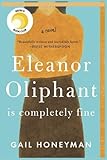 Eleanor Oliphant Is Completely Fine: A Novel -Gail Honeyman - - Eleanor Oliphant Is Completely Fine: A Novel Paperback - June 5, 2018 #1 NEW YORK TIMES BESTSELLER Eleanor Oliphant Is Completely Fine: A Novel -Gail Honeyman - - Eleanor Oliphant Is Completely Fine: A Novel Paperback - June 5, 2018 #1 NEW YORK TIMES BESTSELLER
A Reese Witherspoon Book Club Pick
“Beautifully written and incredibly funny, Eleanor Oliphant Is Completely Fine is about the importance of friendship and human connection. I fell in love with Eleanor, an eccentric and regimented loner whose life beautifully unfolds after a chance encounter with a stranger; I think you will fall in love, too!” —Reese Witherspoon
No one’s ever told Eleanor that life should be better than fine.
Meet Eleanor Oliphant: She struggles with appropriate social skills and tends to say exactly what she’s thinking. Nothing is missing in her carefully timetabled life of avoiding social interactions, where weekends are punctuated by frozen pizza, vodka, and phone chats with Mummy.
But everything changes when Eleanor meets Raymond, the bumbling and deeply unhygienic IT guy from her office. When she and Raymond together save Sammy, an elderly gentleman who has fallen on the sidewalk, the three become the kinds of friends who rescue one another from the lives of isolation they have each been living. And it is Raymond’s big heart that will ultimately help Eleanor find the way to repair her own profoundly damaged one.
Soon to be a major motion picture produced by Reese Witherspoon, Eleanor Oliphant Is Completely Fine is the smart, warm, and uplifting story of an out-of-the-ordinary heroine whose deadpan weirdness and unconscious wit make for an irresistible journey as she realizes. . .
The only way to survive is to open your heart. List Price:$16.00
Our Price:$9.60
|
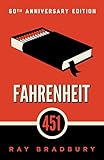 Fahrenheit 451 -Ray Bradbury - - Ray Bradbury's internationally acclaimed novel Fahrenheit 451 is a masterwork of twentieth-century literature set in a bleak, dystopian future. - 249 pages. Paperback. Ray Bradbury’s internationally acclaimed novel Fahrenheit 451 is a masterwork of twentieth-century literature set in a bleak, dystopian future. Fahrenheit 451 -Ray Bradbury - - Ray Bradbury's internationally acclaimed novel Fahrenheit 451 is a masterwork of twentieth-century literature set in a bleak, dystopian future. - 249 pages. Paperback. Ray Bradbury’s internationally acclaimed novel Fahrenheit 451 is a masterwork of twentieth-century literature set in a bleak, dystopian future.
Guy Montag is a fireman. In his world, where television rules and literature is on the brink of extinction, firemen start fires rather than put them out. His job is to destroy the most illegal of commodities, the printed book, along with the houses in which they are hidden.
Montag never questions the destruction and ruin his actions produce, returning each day to his bland life and wife, Mildred, who spends all day with her television “family.” But then he meets an eccentric young neighbor, Clarisse, who introduces him to a past where people didn’t live in fear and to a present where one sees the world through the ideas in books instead of the mindless chatter of television.
When Mildred attempts suicide and Clarisse suddenly disappears, Montag begins to question everything he has ever known. He starts hiding books in his home, and when his pilfering is discovered, the fireman has to run for his life.List Price:$15.99
Our Price:$8.29
|
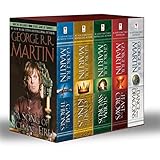 A Game of Thrones / A Clash of Kings / A Storm of Swords / A Feast of Crows / A Dance with Dragons -George R. R. Martin - - George R. R. Martin's A Game of Thrones 5-Book Perfect for fans of HBO’s Game of Thrones—a boxed set featuring the first five novels! A Game of Thrones / A Clash of Kings / A Storm of Swords / A Feast of Crows / A Dance with Dragons -George R. R. Martin - - George R. R. Martin's A Game of Thrones 5-Book Perfect for fans of HBO’s Game of Thrones—a boxed set featuring the first five novels!
An immersive entertainment experience unlike any other, A Song of Ice and Fire has earned George R. R. Martin—dubbed “the American Tolkien” by Time magazine—international acclaim and millions of loyal readers. Now here is the entire monumental cycle:
A GAME OF THRONES
A CLASH OF KINGS
A STORM OF SWORDS
A FEAST FOR CROWS
A DANCE WITH DRAGONS
“One of the best series in the history of fantasy.”—Los Angeles Times
Winter is coming. Such is the stern motto of House Stark, the northernmost of the fiefdoms that owe allegiance to King Robert Baratheon in far-off King’s Landing. There Eddard Stark of Winterfell rules in Robert’s name. There his family dwells in peace and comfort: his proud wife, Catelyn; his sons Robb, Brandon, and Rickon; his daughters Sansa and Arya; and his bastard son, Jon Snow. Far to the north, behind the towering Wall, lie savage Wildings and worse—unnatural things relegated to myth during the centuries-long summer, but proving all too real and all too deadly in the turning of the season.
Yet a more immediate threat lurks to the south, where Jon Arryn, the Hand of the King, has died under mysterious circumstances. Now Robert is riding north to Winterfell, bringing his queen, the lovely but cold Cersei, his son, the cruel, vainglorious Prince Joffrey, and the queen’s brothers Jaime and Tyrion of the powerful and wealthy House Lannister—the first a swordsman without equal, the second a dwarf whose stunted stature belies a brilliant mind. All are heading for Winterfell and a fateful encounter that will change the course of kingdoms.
Meanwhile, across the Narrow Sea, Prince Viserys, heir of the fallen House Targaryen, which once ruled all of Westeros, schemes to reclaim the throne with an army of barbarian Dothraki—whose loyalty he will purchase in the only coin left to him: his beautiful yet innocent sister, Daenerys.
“Long live George Martin . . . a literary dervish, enthralled by complicated characters and vivid language, and bursting with the wild vision of the very best tale tellers.”—The New York TimesList Price:$49.95
Our Price:$34.49
|
New Books for Young Readers
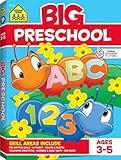 School Zone - Big Preschool Workbook - Ages 3 to 5, Colors, Preschool to Kindergarten, Shapes, Numbers 1-10, Alphabet, Pre-Writing, Pre-Reading, and Phonics (School Zone Big Workbook Series) -School Zone - - Grades - PreK - Ages - 3,4,5 - Weight - 1.746 - Depth - 0.00 - Width - 10.75 School Zone - Big Preschool Workbook - Ages 3 to 5, Colors, Preschool to Kindergarten, Shapes, Numbers 1-10, Alphabet, Pre-Writing, Pre-Reading, and Phonics (School Zone Big Workbook Series) -School Zone - - Grades - PreK - Ages - 3,4,5 - Weight - 1.746 - Depth - 0.00 - Width - 10.75 Find our complete line of educational resources at Amazon.com/SchoolZonePublishing FEATURES & BENEFITS - 320 pages: 319 activity pages, 1 award certificate
- For ages 3-5
- 7.75" x 10.75" pages with durable glossy cover
- Book has 5 sections with Parent notes for each: pre-writing skills, alphabet, colors & shapes, following directions, numbers & early math
- The skill being practiced is listed at the bottom of each page
- Colorful, kid friendly illustrations reinforce the lessons
- Easy directions and visual clues promote self-directed learning
- Concepts and skills build upon one another, progressing from easy to more difficult
- Perforated pages makes it easy to tear out for individual worksheets
- The last page of book is an award certificate that is easy to personalize
AMAZING - BIG Preschool Workbook has 300+ colorful exercises that make learning fun! An A+ adventure unfolds, as kids encounter sensational squares and rocking rectangles, a giant newt reading the newspaper and a dinosaur playing the drums. Bold, bright colors and illustrations ease little ones into learning without feeling overwhelmed. Lessons focus on must-know readiness basics, including colors, shapes, the alphabet, basic phonics, early math, and more, and activities appear in order of increasing difficulty, so preschoolers stay challenged until the end, constantly expanding their skills. WORKBOOKS - Help preschoolers get ready for reading, writing, and numbers! This gigantic, Big Preschool Workbook, packed with creative, colorful activities will make learning feel like play. Writing in workbook pages, as opposed to typing on a computer, can help kids to focus and to learn. Writing by hand fires up specific areas of a child's brain, improving a child's ability to not only remember what he or she learns but to think of new ideas. When kids complete the workbook, fill out the Congrats! certificate to reward a job well done. Hang it on the wall or fridge to display their achievement with pride. RESULTS - Our learning materials have helped educate three generations of kids, creating lifelong learners, and the legacy continues. Digital content, flash cards, workbooks, readers, toys, and games—all are crafted through a child's eyes while integrating parent and teacher standards. PREPARATION - Let us help you prepare your young child for the next grade level with our workbooks, flash cards, books and a Little Scholar Tablet. Keep kids "classroom ready" with these great supplemental learning tools and more! AWARD WINNING - School Zone content has won The Parents' Choice Foundation Award, Tillywig Toy Awards, Brainchild Award, Family Choice Award, Mom's Choice Awards Honoring Excellence, Gold Star Toy Scholastic Parent and Child Award and many more. School Zone Publishing: Nourishing Young Minds OUR STORY: Almost 40 years ago, long-time educators James Hoffman, Ed.D., and his wife Joan Hoffman, M.A., began a retail supply outlet for teachers, then soon identified a need for at-home learning materials to help parents support and supplement their children's classroom instruction. School Zone Publishing fast emerged as the market leader in workbooks and flash cards for preschoolers through sixth graders. School Zone remains family-owned, focused on excellence, responsive to customers, alert to emerging technology, and committed to community. We continually update our products with new features and content, reflective of changing standards, evolving teaching methods, and overall best practices. As just one example, we update our workbook curriculum on an as-needed basis to address changing standards such as those presented by the National Council of Teachers of Mathematics (NCTM) and Common Core. List Price:$12.99
Our Price:$6.69
|
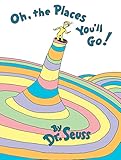 Oh, the Places You'll Go! -Dr. Seuss - - Brand New in box. The product ships with all relevant accessories Oh, the Places You'll Go! -Dr. Seuss - - Brand New in box. The product ships with all relevant accessories Dr. Seuss’s wonderfully wise Oh, the Places You’ll Go! is the perfect send-off for grads—from nursery school, high school, college, and beyond!
From soaring to high heights and seeing great sights to being left in a Lurch on a prickle-ly perch, Dr. Seuss addresses life’s ups and downs with his trademark humorous verse and illustrations, while encouraging readers to find the success that lies within. In a starred review, Booklist notes, “Seuss’s message is simple but never sappy: life may be a ‘Great Balancing Act,’ but through it all ‘There’s fun to be done.’” A perennial favorite and a perfect gift for anyone starting a new phase in their life! List Price:$18.99
Our Price:$10.99
|
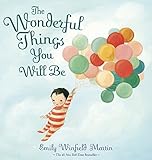 The Wonderful Things You Will Be -Emily Winfield Martin - - Random House Books for Young Readers The New York Times bestseller that celebrates the dreams, acceptance, and love that parents have for their children . . . now and forever! The Wonderful Things You Will Be -Emily Winfield Martin - - Random House Books for Young Readers The New York Times bestseller that celebrates the dreams, acceptance, and love that parents have for their children . . . now and forever!
From brave and bold to creative and clever, Emily Winfield Martin's rhythmic rhyme expresses all the loving things that parents think of when they look at their children. With beautiful, and sometimes humorous, illustrations, and a clever gatefold with kids in costumes, this is a book grown-ups will love reading over and over to kids-both young and old. A great gift for any occasion, but a special stand-out for baby showers, birthdays, and graduation. The Wonderful Things You Will Be has a loving and truthful message that will endure for lifetimes.List Price:$17.99
Our Price:$10.79
|
 The Pigeon HAS to Go to School! -Mo Willems - The Pigeon HAS to Go to School! -Mo Willems - Why does the Pigeon have to go to school? He already knows everything! And what if he doesn't like it? What if the teacher doesn't like him? What if he learns TOO MUCH!?!
Ask not for whom the school bell rings; it rings for the Pigeon! List Price:$16.99
Our Price:$11.38
|
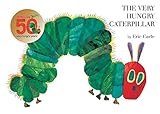 The Very Hungry Caterpillar -Eric Carle - - Sold As 1 EA. - Caterpillar THE all-time classic picture book, from generation to generation, sold somewhere in the world every 30 seconds! Have you shared it with a child or grandchild in your life? The Very Hungry Caterpillar -Eric Carle - - Sold As 1 EA. - Caterpillar THE all-time classic picture book, from generation to generation, sold somewhere in the world every 30 seconds! Have you shared it with a child or grandchild in your life?
Including a special feature, die cuts, this beautiful board book edition, perfect for teaching the days of the week, offers readers an interactive experience.
"The very hungry caterpillar literally eats his way through the pages of the book—and right into your child's heart..."
—Mother's Manual"Gorgeously illustrated, brilliantly innovative..."
—The New York Times Book Review List Price:
Our Price:$5.60
|
 Summer Bridge Activities - Grades 3 - 4, Workbook for Summer Learning Loss, Math, Reading, Writing and More with Flash Cards and Stickers - - - 160 pages Summer Bridge Activities - Grades 3 - 4, Workbook for Summer Learning Loss, Math, Reading, Writing and More with Flash Cards and Stickers - - - 160 pages AWARD-WINNING WORKBOOK: Summer Bridge Activities is the recipient of the 2018 Kids' Product of the Year Award and Travel Fun of the Year Award from "Creative Child Magazine." This workbook was designed to prevent summer learning loss and help your child get a headstart on the next year. INCLUDES: One Summer Bridge Activities workbook for 3rd to 4th grade. This workbook focuses on all subjects - math, writing, reading, science, social studies, fitness and character building. It also includes bonus stickers and flash cards. 15 MINUTES A DAY: These best-selling summer activity books are designed to prevent learning loss in just 15 minutes per day. Each page is numbered by day so children and parents can track progress and reach monthly learning goals. TEACHER-RECOMMENDED: Summer Bridge is a teacher-recommended workbook that parents have loved and trusted for the last 10 years. Summer Bridge Activities is available for preschool through 8th grade. Support your children through the end of middle school! SUMMER LEARNING LOSS: Summer learning loss is when children lose skills learned in school over the course of the summer season. Two months of learning loss occurs during the summer, with the highest losses being in math and spelling. List Price:$14.99
Our Price:$9.98
|
 Summer Bridge Activities - Grades K - 1, Workbook for Summer Learning Loss, Math, Reading, Writing and More with Flash Cards and Stickers - - - 160 pages Summer Bridge Activities - Grades K - 1, Workbook for Summer Learning Loss, Math, Reading, Writing and More with Flash Cards and Stickers - - - 160 pages AWARD-WINNING WORKBOOK: Summer Bridge Activities is the recipient of the 2018 Kids' Product of the Year Award and Travel Fun of the Year Award from "Creative Child Magazine." This workbook was designed to prevent summer learning loss and help your child get a headstart on the next year. INCLUDES: One Summer Bridge Activities workbook for kindergarten to 1st grade. This workbook focuses on all subjects - math, writing, reading, science, social studies, fitness and character building. It also includes bonus stickers and flash cards. 15 MINUTES A DAY: These best-selling summer activity books are designed to prevent learning loss in just 15 minutes per day. Each page is numbered by day so children and parents can track progress and reach monthly learning goals. TEACHER-RECOMMENDED: Summer Bridge is a teacher-recommended workbook that parents have loved and trusted for the last 10 years. Summer Bridge Activities is available for preschool through 8th grade. Support your children through the end of middle school! SUMMER LEARNING LOSS: Summer learning loss is when children lose skills learned in school over the course of the summer season. Two months of learning loss occurs during the summer, with the highest losses being in math and spelling. List Price:$14.99
Our Price:$10.00
|
 Summer Bridge Activities - Grades 4 - 5, Workbook for Summer Learning Loss, Math, Reading, Writing and More with Flash Cards and Stickers - - - With 12 weeks of learning fun, Summer Bridge Activities is the perfect way to keep skills sharp all summer long! - Bonus flash cards and an online companion are included. Summer Bridge Activities - Grades 4 - 5, Workbook for Summer Learning Loss, Math, Reading, Writing and More with Flash Cards and Stickers - - - With 12 weeks of learning fun, Summer Bridge Activities is the perfect way to keep skills sharp all summer long! - Bonus flash cards and an online companion are included. AWARD-WINNING WORKBOOK: Summer Bridge Activities is the recipient of the 2018 Kids' Product of the Year Award and Travel Fun of the Year Award from "Creative Child Magazine." This workbook was designed to prevent summer learning loss and help your child get a headstart on the next year. INCLUDES: One Summer Bridge Activities workbook for 4th to 5th grade. This workbook focuses on all subjects - math, writing, reading, science, social studies, fitness and character building. It also includes bonus stickers and flash cards. 15 MINUTES A DAY: These best-selling summer activity books are designed to prevent learning loss in just 15 minutes per day. Each page is numbered by day so children and parents can track progress and reach monthly learning goals. TEACHER-RECOMMENDED: Summer Bridge is a teacher-recommended workbook that parents have loved and trusted for the last 10 years. Summer Bridge Activities is available for preschool through 8th grade. Support your children through the end of middle school! SUMMER LEARNING LOSS: Summer learning loss is when children lose skills learned in school over the course of the summer season. Two months of learning loss occurs during the summer, with the highest losses being in math and spelling. List Price:$14.99
Our Price:$9.90
|
 Summer Bridge Activities - Grades 2 - 3, Workbook for Summer Learning Loss, Math, Reading, Writing and More with Flash Cards and Stickers - - - 160 pages. Summer Bridge Activities - Grades 2 - 3, Workbook for Summer Learning Loss, Math, Reading, Writing and More with Flash Cards and Stickers - - - 160 pages. AWARD-WINNING WORKBOOK: Summer Bridge Activities is the recipient of the 2018 Kids' Product of the Year Award and Travel Fun of the Year Award from "Creative Child Magazine." This workbook was designed to prevent summer learning loss and help your child get a headstart on the next year. INCLUDES: One Summer Bridge Activities workbook for 2nd to 3rd grade. This workbook focuses on all subjects - math, writing, reading, science, social studies, fitness and character building. It also includes bonus stickers and flash cards. 15 MINUTES A DAY: These best-selling summer activity books are designed to prevent learning loss in just 15 minutes per day. Each page is numbered by day so children and parents can track progress and reach monthly learning goals. TEACHER-RECOMMENDED: Summer Bridge is a teacher-recommended workbook that parents have loved and trusted for the last 10 years. Summer Bridge Activities is available for preschool through 8th grade. Support your children through the end of middle school! SUMMER LEARNING LOSS: Summer learning loss is when children lose skills learned in school over the course of the summer season. Two months of learning loss occurs during the summer, with the highest losses being in math and spelling. List Price:$14.99
Our Price:$9.99
|
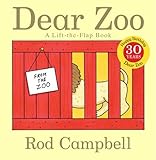 Dear Zoo: A Lift-the-Flap Book -Rod Campbell - - N/A "A best selling lift-the-flap board book that introduces interactive play along with zoo animals." - Seira Wilson, Amazon Editor Dear Zoo: A Lift-the-Flap Book -Rod Campbell - - N/A "A best selling lift-the-flap board book that introduces interactive play along with zoo animals." - Seira Wilson, Amazon Editor
Rod Campbell's classic lift-the-flap book Dear Zoo has been a firm favorite with toddlers and parents alike ever since it was first published in 1982.
Young readers love lifting the flaps to discover the animals the zoo has sent-a monkey, a lion, and even an elephant! But will they ever find the perfect pet?
With bright, bold artwork, a catchy refrain, and a whole host of favorite animals, Dear Zoo is a must for every child's bookshelf.
List Price:$6.99
Our Price:$5.00
|
Top Ten Non-Fiction
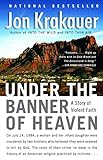 Under the Banner of Heaven: A Story of Violent Faith -Jon Krakauer - - Anchor Books This extraordinary work of investigative journalism takes readers inside America’s isolated Mormon Fundamentalist communities, where some 40,000 people still practice polygamy. Defying both civil authorities and the Mormon establishment in Salt Lake City, the renegade leaders of these Taliban-like theocracies are zealots who answer only to God. Under the Banner of Heaven: A Story of Violent Faith -Jon Krakauer - - Anchor Books This extraordinary work of investigative journalism takes readers inside America’s isolated Mormon Fundamentalist communities, where some 40,000 people still practice polygamy. Defying both civil authorities and the Mormon establishment in Salt Lake City, the renegade leaders of these Taliban-like theocracies are zealots who answer only to God.
At the core of Krakauer’s book are brothers Ron and Dan Lafferty, who insist they received a commandment from God to kill a blameless woman and her baby girl. Beginning with a meticulously researched account of this appalling double murder, Krakauer constructs a multi-layered, bone-chilling narrative of messianic delusion, polygamy, savage violence, and unyielding faith. Along the way he uncovers a shadowy offshoot of America’s fastest growing religion, and raises provocative questions about the nature of religious belief.List Price:$16.95
Our Price:$13.02
|
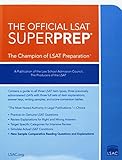 The Official LSAT SuperPrep: The Champion of LSAT Prep -Law School Admission Council - - Law School Admission Council The Official LSAT SuperPrep: The Champion of LSAT Prep -Law School Admission Council - - Law School Admission Council SuperPrep is our most comprehensive LSAT preparation book. It includes: - 3 complete PrepTests
- a guide to LSAT logic
- explanations for every item in all 3 tests (Feb. 2000, Feb. 1999, Feb. 1996)
- sample Comparative Reading questions and explanations
List Price:$28.00
Our Price:$20.35
|
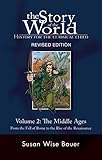 The Story of the World: History for the Classical Child: The Middle Ages: From the Fall of Rome to the Rise of the Renaissance (Second Revised Edition) (Vol. 2) (Story of the World) -Susan Wise Bauer - - The Story of the World History for the Classical Child The Middle Ages from the Fall of Rome to the Rise of the Renaissance The Story of the World: History for the Classical Child: The Middle Ages: From the Fall of Rome to the Rise of the Renaissance (Second Revised Edition) (Vol. 2) (Story of the World) -Susan Wise Bauer - - The Story of the World History for the Classical Child The Middle Ages from the Fall of Rome to the Rise of the Renaissance This second book in the four-volume narrative history series for elementary students will transform your study of history. The Story of the World has won awards from numerous homeschooling magazines and readers' polls―over 150,000 copies of the series in print! Now more than ever, other cultures are affecting our everyday lives―and our children need to learn about the other countries of the world and their history. Susan Wise Bauer has provided a captivating guide to the history of other lands. Written in an engaging, straightforward manner, this revised edition of The Story of the World: History for the Classical Child, Volume 2: The Middle Ages weaves world history into a story book format. Who discovered chocolate? What happened to the giant Fovor of the Mighty Blows? Why did the Ottoman Turks drag their war ships across dry land?
The Story of the World covers the sweep of human history from ancient times until the present. Africa, China, Europe, the Americas―find out what happened all around the world in long-ago times. Designed as a read-aloud project for parents and children to share together, The Story of the World includes each continent and major people group. Volume 2: The Middle Ages, is the second of a four-volume series and covers the major historical events in the years 400 to 1600 CE, as well as including maps, illustrations, and tales from each culture.
Each Story of the World volume provides a full year of history study when combined with the Activity Book, Audiobook, and Tests―each available separately to accompany each volume of TheStory of the World Text Book. Volume 2 Grade Recommendation: Grades 1-6. Illustrated throughout with black-and-white drawings and mapsList Price:$17.95
Our Price:$14.36
|
 The Story of the World: History for the Classical Child, Volume 3: Early Modern Times -Susan Wise Bauer - The Story of the World: History for the Classical Child, Volume 3: Early Modern Times -Susan Wise Bauer - This third book in the four-volume narrative history series for elementary students will transform your study of history. The Story of the World has won awards from numerous homeschooling magazines and readers' polls―over 150,000 copies of the series in print! Now more than ever, other cultures are affecting our everyday lives―and our children need to learn about the other countries of the world and their history. Susan Wise Bauer has provided a captivating guide to the history of other lands. Written in an engaging, straightforward manner, The Story of the World: History for the Classical Child; Volume 3: Early Modern Times weaves world history into a story book format. Who was the Sun King? Why did the Luddites go around England smashing machines? And how did samurai become sumo wrestlers?
The Story of the World covers the sweep of human history from ancient times until the present. Africa, China, Europe, the Americas―find out what happened all around the world in long-ago times. Designed as a read-aloud project for parents and children to share together, The Story of the World includes each continent and major people group. Volume 3: Early Modern Times is the third of a four volume series and covers the major historical events in the years 1600 to 1850, as well as including maps, illustrations, and tales from each culture.
Each Story of the World volume provides a full year of history study when combined with the Activity Book, Audiobook, and Tests―each available separately to accompany each volume of TheStory of the World Text Book. Volume 3 Grade Recommendation: Grades 3-8. Illustrated throughout with black-and-white drawings and mapsList Price:$17.95
Our Price:$14.35
|
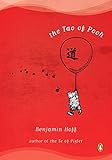 The Tao of Pooh -Benjamin Hoff - - Great product! For Taoists everywhere, the New York Times bestseller from the author of The Te of Piglet. The Tao of Pooh -Benjamin Hoff - - Great product! For Taoists everywhere, the New York Times bestseller from the author of The Te of Piglet.
Happy 90th birthday (10/14/16), to one of the world's most beloved icons of literature, Winnie-the-Pooh!
The how of Pooh? The Tao of who? The Tao of Pooh!?! In which it is revealed that one of the world's great Taoist masters isn't Chinese--or a venerable philosopher--but is in fact none other than that effortlessly calm, still, reflective bear. A. A. Milne's Winnie-the-Pooh! While Eeyore frets, and Piglet hesitates, and Rabbit calculates, and Owl pontificates, Pooh just is.
And that's a clue to the secret wisdom of the Taoists.List Price:$15.00
Our Price:
|
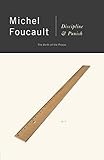 Discipline & Punish: The Birth of the Prison -Michel Foucault - - Vintage Books In this brilliant work, the most influential philosopher since Sartre suggests that such vaunted reforms as the abolition of torture and the emergence of the modern penitentiary have merely shifted the focus of punishment from the prisoner's body to his soul. Discipline & Punish: The Birth of the Prison -Michel Foucault - - Vintage Books In this brilliant work, the most influential philosopher since Sartre suggests that such vaunted reforms as the abolition of torture and the emergence of the modern penitentiary have merely shifted the focus of punishment from the prisoner's body to his soul.List Price:$17.00
Our Price:$13.09
|
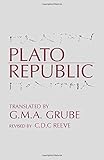 Republic (Hackett Classics) -Plato - - Used Book in Good Condition Republic (Hackett Classics) -Plato - - Used Book in Good Condition The revised edition of Grube's classic translation follows and furthers Grube's noted success in combining fidelity to Plato’s text with natural readability, while reflecting the fruits of new scholarship and insights into Plato's thought since publication of the first edition in 1974. A new introduction, index, and bibliography by Professor Reeve are included in this new rendering. List Price:$13.00
Our Price:$12.35
|
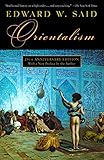 Orientalism -Edward W. Said - - Orientalism Orientalism -Edward W. Said - - Orientalism More than three decades after its first publication, Edward Said's groundbreaking critique of the West's historical, cultural, and political perceptions of the East has become a modern classic.
In this wide-ranging, intellectually vigorous study, Said traces the origins of "orientalism" to the centuries-long period during which Europe dominated the Middle and Near East and, from its position of power, defined "the orient" simply as "other than" the occident. This entrenched view continues to dominate western ideas and, because it does not allow the East to represent itself, prevents true understanding. Essential, and still eye-opening, Orientalism remains one of the most important books written about our divided world. List Price:$17.00
Our Price:$12.95
|
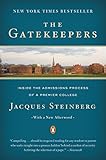 The Gatekeepers: Inside the Admissions Process of a Premier College -Jacques Steinberg - In the fall of 1999, New York Times education reporter Jacques Steinberg was given an unprecedented opportunity to observe the admissions process at prestigious Wesleyan University. Over the course of nearly a year, Steinberg accompanied admissions officer Ralph Figueroa on a tour to assess and recruit the most promising students in the country. The Gatekeepers follows a diverse group of prospective students as they compete for places in the nation's most elite colleges. The first book to reveal the college admission process in such behind-the-scenes detail, The Gatekeepers will be required reading for every parent of a high school-age child and for every student facing the arduous and anxious task of applying to college. The Gatekeepers: Inside the Admissions Process of a Premier College -Jacques Steinberg - In the fall of 1999, New York Times education reporter Jacques Steinberg was given an unprecedented opportunity to observe the admissions process at prestigious Wesleyan University. Over the course of nearly a year, Steinberg accompanied admissions officer Ralph Figueroa on a tour to assess and recruit the most promising students in the country. The Gatekeepers follows a diverse group of prospective students as they compete for places in the nation's most elite colleges. The first book to reveal the college admission process in such behind-the-scenes detail, The Gatekeepers will be required reading for every parent of a high school-age child and for every student facing the arduous and anxious task of applying to college.
"[The Gatekeepers] provides the deep insight that is missing from the myriad how-to books on admissions that try to identify the formula for getting into the best colleges...I really didn't want the book to end." —The New York TimesList Price:$18.00
Our Price:$14.06
|
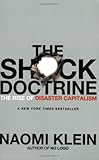 The Shock Doctrine: The Rise of Disaster Capitalism -Naomi Klein - - neo-liberal economics in action - the Chicago School of economics - disaster capitalilsm The Shock Doctrine: The Rise of Disaster Capitalism -Naomi Klein - - neo-liberal economics in action - the Chicago School of economics - disaster capitalilsm In this groundbreaking alternative history of the most dominant ideology of our time, Milton Friedman's free-market economic revolution, Naomi Klein challenges the popular myth of this movement's peaceful global victory. From Chile in 1973 to Iraq today, Klein shows how Friedman and his followers have repeatedly harnessed terrible shocks and violence to implement their radical policies. As John Gray wrote in The Guardian, "There are very few books that really help us understand the present. The Shock Doctrine is one of those books." List Price:$22.00
Our Price:$8.45
|
Health and Lifestyle
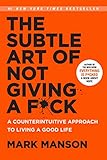 The Subtle Art of Not Giving a F*ck: A Counterintuitive Approach to Living a Good Life -Mark Manson - - The Subtle Art of Not Giving a Fuck The Subtle Art of Not Giving a F*ck: A Counterintuitive Approach to Living a Good Life -Mark Manson - - The Subtle Art of Not Giving a Fuck #1 New York Times Bestseller Over 6 million copies sold In this generation-defining self-help guide, a superstar blogger cuts through the crap to show us how to stop trying to be "positive" all the time so that we can truly become better, happier people. For decades, we’ve been told that positive thinking is the key to a happy, rich life. "F**k positivity," Mark Manson says. "Let’s be honest, shit is f**ked and we have to live with it." In his wildly popular Internet blog, Manson doesn’t sugarcoat or equivocate. He tells it like it is—a dose of raw, refreshing, honest truth that is sorely lacking today. The Subtle Art of Not Giving a F**k is his antidote to the coddling, let’s-all-feel-good mindset that has infected modern society and spoiled a generation, rewarding them with gold medals just for showing up. Manson makes the argument, backed both by academic research and well-timed poop jokes, that improving our lives hinges not on our ability to turn lemons into lemonade, but on learning to stomach lemons better. Human beings are flawed and limited—"not everybody can be extraordinary, there are winners and losers in society, and some of it is not fair or your fault." Manson advises us to get to know our limitations and accept them. Once we embrace our fears, faults, and uncertainties, once we stop running and avoiding and start confronting painful truths, we can begin to find the courage, perseverance, honesty, responsibility, curiosity, and forgiveness we seek. There are only so many things we can give a f**k about so we need to figure out which ones really matter, Manson makes clear. While money is nice, caring about what you do with your life is better, because true wealth is about experience. A much-needed grab-you-by-the-shoulders-and-look-you-in-the-eye moment of real-talk, filled with entertaining stories and profane, ruthless humor, The Subtle Art of Not Giving a F**k is a refreshing slap for a generation to help them lead contented, grounded lives. List Price:$24.99
Our Price:$14.99
|
 Player's Handbook (Dungeons & Dragons) -Wizards RPG Team - - Description Coming Soon Create heroic characters for the world’s greatest roleplaying game. Player's Handbook (Dungeons & Dragons) -Wizards RPG Team - - Description Coming Soon Create heroic characters for the world’s greatest roleplaying game.
The Player’s Handbook is the essential reference for every Dungeons & Dragons roleplayer. It contains rules for character creation and advancement, backgrounds and skills, exploration and combat, equipment, spells, and much more. Use this book to create characters from among the most iconic D&D races and classes.
Publisher’s Weekly #1 Best Seller in Hardcover Nonfiction
Wall Street Journal #1 Best Seller in Hardcover Nonfiction
• In Dungeons & Dragons, you and your friends coauthor your own legend. Guided by a Dungeon Master, you create characters and play their roles in a story, rolling dice and navigating maps as you unfold a tale as limitless as your imagination.
• The Player’s Handbook is the first of three D&D core rulebooks, along with the Monster Manual and the Dungeon Master’s Guide. The Player’s Handbook is the cornerstone. It’s the foundational text of D&D’s fifth edition—for beginners and for veterans alike.
• The Player’s Handbook walks you through how to create a Dungeons & Dragons character—the role you’ll play in the D&D world.
• Dungeons & Dragons is the world’s greatest roleplaying game. Created in 1974, D&D transformed gaming culture by blending traditional fantasy with miniatures and wargaming.List Price:$49.95
Our Price:$29.97
|
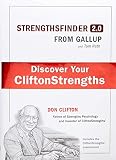 StrengthsFinder 2.0 -Tom Rath - - A personalized Strengths Discovery and Action-Planning Guide - 50 Ideas for Action (10 strategies for building on each of your top five themes) - A more customized version of your top five theme report StrengthsFinder 2.0 -Tom Rath - - A personalized Strengths Discovery and Action-Planning Guide - 50 Ideas for Action (10 strategies for building on each of your top five themes) - A more customized version of your top five theme report Do you have the opportunity to do what you do best every day?
Chances are, you don't. All too often, our natural talents go untapped. From the cradle to the cubicle, we devote more time to fixing our shortcomings than to developing our strengths.
To help people uncover their talents, Gallup introduced the first version of its online assessment, StrengthsFinder, in 2001 which ignited a global conversation and helped millions to discover their top five talents.
In its latest national bestseller, StrengthsFinder 2.0, Gallup unveils the new and improved version of its popular assessment, language of 34 themes, and much more (see below for details). While you can read this book in one sitting, you'll use it as a reference for decades.
Loaded with hundreds of strategies for applying your strengths, this new book and accompanying website will change the way you look at yourself--and the world around you--forever.
Available exclusively in StrengthsFinder 2.0:
(using the unique access code included with each book)
* A new and upgraded edition of the StrengthsFinder assessment
* A personalized Strengths Discovery and Action-Planning Guide for applying your strengths in the next week, month, and year
* A more customized version of your top five theme report
* 50 Ideas for Action (10 strategies for building on each of your top five themes)
List Price:$34.00
Our Price:$14.59
|
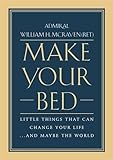 Make Your Bed: Little Things That Can Change Your Life...And Maybe the World -William H. McRaven - - Make Your Bed Audiobook The inspiring #1 New York Times bestseller that "should be read by every leader in America." (Wall Street Journal) Make Your Bed: Little Things That Can Change Your Life...And Maybe the World -William H. McRaven - - Make Your Bed Audiobook The inspiring #1 New York Times bestseller that "should be read by every leader in America." (Wall Street Journal)
"Powerful." --USA Today
"Full of captivating personal anecdotes from inside the national security vault." --Washington Post
"Superb, smart, and succinct." --Forbes
BASED ON THE INCREDIBLE GRADUATION SPEECH WITH OVER 14 MILLION VIEWS ON YOUTUBE
If you want to change the world, start off by making your bed.
On May 17, 2014, Admiral William H. McRaven addressed the graduating class of the University of Texas at Austin on their Commencement day. Taking inspiration from the university's slogan, "What starts here changes the world," he shared the ten principles he learned during Navy Seal training that helped him overcome challenges not only in his training and long Naval career, but also throughout his life; and he explained how anyone can use these basic lessons to change themselves-and the world-for the better.
Admiral McRaven's original speech went viral with over 10 million views. Building on the core tenets laid out in his speech, McRaven now recounts tales from his own life and from those of people he encountered during his military service who dealt with hardship and made tough decisions with determination, compassion, honor, and courage. Told with great humility and optimism, this timeless book provides simple wisdom, practical advice, and words of encouragement that will inspire readers to achieve more, even in life's darkest moments.List Price:$20.00
Our Price:$11.00
|
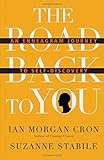 The Road Back to You: An Enneagram Journey to Self-Discovery -ARRAY(0x32c1f88) - - IVP Books Ignorance is bliss―except in self-awareness. The Road Back to You: An Enneagram Journey to Self-Discovery -ARRAY(0x32c1f88) - - IVP Books Ignorance is bliss―except in self-awareness.
What you don't know about yourself can hurt you and your relationships―and maybe even how you make your way in the world. It can also keep you in the shallows with God. Do you want help figuring out who you are and why you're stuck in the same ruts?
The Enneagram is an ancient personality type system with an uncanny accuracy in describing how human beings are wired, both positively and negatively. In The Road Back to You Ian Morgan Cron and Suzanne Stabile forge a unique approach―a practical, comprehensive way of accessing Enneagram wisdom and exploring its connections with Christian spirituality for a deeper knowledge of God and of ourselves.
Funny and filled with stories, this book allows you to understand more about each of the Enneagram types, keeping you turning the pages long after you have read the chapter about yourself. Beginning with changes you can start making today, the wisdom of the Enneagram can help you get on the road that will take you further along into who you really are―leading you into places of spiritual discovery you would never have found on your own, and paving the way to the wiser, more compassionate person you want to become.List Price:$24.00
Our Price:$14.40
|
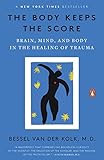 The Body Keeps the Score: Brain, Mind, and Body in the Healing of Trauma -Bessel van der Kolk M.D. - - The Body Keeps the Score Brain Mind and Body in the Healing of Trauma “Essential reading for anyone interested in understanding and treating traumatic stress and the scope of its impact on society.” —Alexander McFarlane, Director of the Centre for Traumatic Stress Studies The Body Keeps the Score: Brain, Mind, and Body in the Healing of Trauma -Bessel van der Kolk M.D. - - The Body Keeps the Score Brain Mind and Body in the Healing of Trauma “Essential reading for anyone interested in understanding and treating traumatic stress and the scope of its impact on society.” —Alexander McFarlane, Director of the Centre for Traumatic Stress Studies
A pioneering researcher transforms our understanding of trauma and offers a bold new paradigm for healing in this New York Times bestseller
Trauma is a fact of life. Veterans and their families deal with the painful aftermath of combat; one in five Americans has been molested; one in four grew up with alcoholics; one in three couples have engaged in physical violence. Dr. Bessel van der Kolk, one of the world’s foremost experts on trauma, has spent over three decades working with survivors. In The Body Keeps the Score, he uses recent scientific advances to show how trauma literally reshapes both body and brain, compromising sufferers’ capacities for pleasure, engagement, self-control, and trust. He explores innovative treatments—from neurofeedback and meditation to sports, drama, and yoga—that offer new paths to recovery by activating the brain’s natural neuroplasticity. Based on Dr. van der Kolk’s own research and that of other leading specialists, The Body Keeps the Score exposes the tremendous power of our relationships both to hurt and to heal—and offers new hope for reclaiming lives.List Price:$18.00
Our Price:$10.80
|
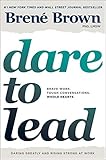 Dare to Lead: Brave Work. Tough Conversations. Whole Hearts. -Brené Brown - - 9780399592522 - Dare to Lead #1 NEW YORK TIMES BESTSELLER • Brené Brown has taught us what it means to dare greatly, rise strong, and brave the wilderness. Now, based on new research conducted with leaders, change makers, and culture shifters, she’s showing us how to put those ideas into practice so we can step up and lead. Dare to Lead: Brave Work. Tough Conversations. Whole Hearts. -Brené Brown - - 9780399592522 - Dare to Lead #1 NEW YORK TIMES BESTSELLER • Brené Brown has taught us what it means to dare greatly, rise strong, and brave the wilderness. Now, based on new research conducted with leaders, change makers, and culture shifters, she’s showing us how to put those ideas into practice so we can step up and lead.
Don’t miss the hourlong Netflix special Brené Brown: The Call to Courage!
NAMED ONE OF THE BEST BOOKS OF THE YEAR BY BLOOMBERG
Leadership is not about titles, status, and wielding power. A leader is anyone who takes responsibility for recognizing the potential in people and ideas, and has the courage to develop that potential.
When we dare to lead, we don’t pretend to have the right answers; we stay curious and ask the right questions. We don’t see power as finite and hoard it; we know that power becomes infinite when we share it with others. We don’t avoid difficult conversations and situations; we lean into vulnerability when it’s necessary to do good work.
But daring leadership in a culture defined by scarcity, fear, and uncertainty requires skill-building around traits that are deeply and uniquely human. The irony is that we’re choosing not to invest in developing the hearts and minds of leaders at the exact same time as we’re scrambling to figure out what we have to offer that machines and AI can’t do better and faster. What can we do better? Empathy, connection, and courage, to start.
Four-time #1 New York Times bestselling author Brené Brown has spent the past two decades studying the emotions and experiences that give meaning to our lives, and the past seven years working with transformative leaders and teams spanning the globe. She found that leaders in organizations ranging from small entrepreneurial startups and family-owned businesses to nonprofits, civic organizations, and Fortune 50 companies all ask the same question:
How do you cultivate braver, more daring leaders, and how do you embed the value of courage in your culture?
In this new book, Brown uses research, stories, and examples to answer these questions in the no-BS style that millions of readers have come to expect and love.
Brown writes, “One of the most important findings of my career is that daring leadership is a collection of four skill sets that are 100 percent teachable, observable, and measurable. It’s learning and unlearning that requires brave work, tough conversations, and showing up with your whole heart. Easy? No. Because choosing courage over comfort is not always our default. Worth it? Always. We want to be brave with our lives and our work. It’s why we’re here.”
Whether you’ve read Daring Greatly and Rising Strong or you’re new to Brené Brown’s work, this book is for anyone who wants to step up and into brave leadership.List Price:$28.00
Our Price:$16.80
|
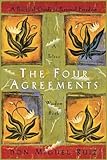 The Four Agreements: A Practical Guide to Personal Freedom (A Toltec Wisdom Book) -Don Miguel Ruiz - - The Four Agreements: A Practical Guide to Personal Freedom (A Toltec Wisdom Book) - "Happiness is a choice, and so is suffering." In The Four Agreements, bestselling author don Miguel Ruiz reveals the source of self-limiting beliefs that rob us of joy and create needless suffering. Based on ancient Toltec wisdom, The Four Agreements offer a powerful code of conduct that can rapidly transform our lives to a new experience of freedom, true happiness, and love. The Four Agreements: A Practical Guide to Personal Freedom (A Toltec Wisdom Book) -Don Miguel Ruiz - - The Four Agreements: A Practical Guide to Personal Freedom (A Toltec Wisdom Book) - "Happiness is a choice, and so is suffering." In The Four Agreements, bestselling author don Miguel Ruiz reveals the source of self-limiting beliefs that rob us of joy and create needless suffering. Based on ancient Toltec wisdom, The Four Agreements offer a powerful code of conduct that can rapidly transform our lives to a new experience of freedom, true happiness, and love.
• A New York Times bestseller for over a decade.
• Over 8.5 million copies sold in the U.S.
• Translated into 46 languages worldwide.
"This book by don Miguel Ruiz, simple yet so powerful, has made a tremendous difference in how I think and act in every encounter." — Oprah Winfrey
"Don Miguel Ruiz’s book is a roadmap to enlightenment and freedom." — Deepak Chopra, Author, The Seven Spiritual Laws of Success
"An inspiring book with many great lessons." — Wayne Dyer, Author, Real Magic
"In the tradition of Castaneda, Ruiz distills essential Toltec wisdom, expressing with clarity and impeccability what it means for men and women to live as peaceful warriors in the modern world." — Dan Millman, Author, Way of the Peaceful WarriorList Price:$6.48
Our Price:$5.37
|
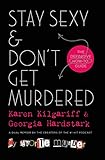 Stay Sexy & Don't Get Murdered: The Definitive How-To Guide -ARRAY(0x29c7f90) - Stay Sexy & Don't Get Murdered: The Definitive How-To Guide -ARRAY(0x29c7f90) - The highly anticipated first book by Karen Kilgariff and Georgia Hardstark, the voices behind the #1 hit podcast My Favorite Murder! Sharing never-before-heard stories ranging from their struggles with depression, eating disorders, and addiction, Karen and Georgia irreverently recount their biggest mistakes and deepest fears, reflecting on the formative life events that shaped them into two of the most followed voices in the nation. In Stay Sexy & Don’t Get Murdered, Karen and Georgia focus on the importance of self-advocating and valuing personal safety over being ‘nice’ or ‘helpful.’ They delve into their own pasts, true crime stories, and beyond to discuss meaningful cultural and societal issues with fierce empathy and unapologetic frankness. “My Favorite Murder started as a way for Karen Kilgariff and Georgia Hardstark to work through their fears. Now it’s a worldwide community…. Even its darkest moments are lightened by Karen and Georgia's effortlessly funny banter and genuine empathy.” ―RollingStone.com Age Range: AdultList Price:$24.99
Our Price:$14.99
|
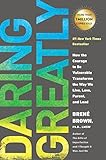 Daring Greatly: How the Courage to Be Vulnerable Transforms the Way We Live, Love, Parent, and Lead -Brené Brown - - Avery Publishing Group The #1 New York Times bestseller. 1 million copies sold! Daring Greatly: How the Courage to Be Vulnerable Transforms the Way We Live, Love, Parent, and Lead -Brené Brown - - Avery Publishing Group The #1 New York Times bestseller. 1 million copies sold!
Don’t miss the hourlong Netflix special Brené Brown: The Call to Courage!
From thought leader Brené Brown, a transformative new vision for the way we lead, love, work, parent, and educate that teaches us the power of vulnerability.
“It is not the critic who counts; not the man who points out how the strong man stumbles, or where the doer of deeds could have done them better. The credit belongs to the man who is actually in the arena, whose face is marred by dust and sweat and blood; who strives valiantly; . . . who at the best knows in the end the triumph of high achievement, and who at worst, if he fails, at least fails while daring greatly.”—Theodore Roosevelt
Every day we experience the uncertainty, risks, and emotional exposure that define what it means to be vulnerable or to dare greatly. Based on twelve years of pioneering research, Brené Brown PhD, LMSW, dispels the cultural myth that vulnerability is weakness and argues that it is, in truth, our most accurate measure of courage.
Brown explains how vulnerability is both the core of difficult emotions like fear, grief, and disappointment, and the birthplace of love, belonging, joy, empathy, innovation, and creativity. She writes: “When we shut ourselves off from vulnerability, we distance ourselves from the experiences that bring purpose and meaning to our lives.”
Daring Greatly is not about winning or losing. It’s about courage. In a world where “never enough” dominates and feeling afraid has become second nature, vulnerability is subversive. Uncomfortable. It’s even a little dangerous at times. And, without question, putting ourselves out there means there’s a far greater risk of getting criticized or feeling hurt. But when we step back and examine our lives, we will find that nothing is as uncomfortable, dangerous, and hurtful as standing on the outside of our lives looking in and wondering what it would be like if we had the courage to step into the arena—whether it’s a new relationship, an important meeting, the creative process, or a difficult family conversation. Daring Greatly is a practice and a powerful new vision for letting ourselves be seen.List Price:$17.00
Our Price:$10.20
|
|
|

 amazon.com
 amazon.uk
 amazon.ca
 amazon.fr
 amazon.de
 amazon.jp